
Acanthostega
Early stem-tetrapod with eight-digited limbs, bridging fish and land vertebrates.

Maija Karala · CC BY-SA 3.0
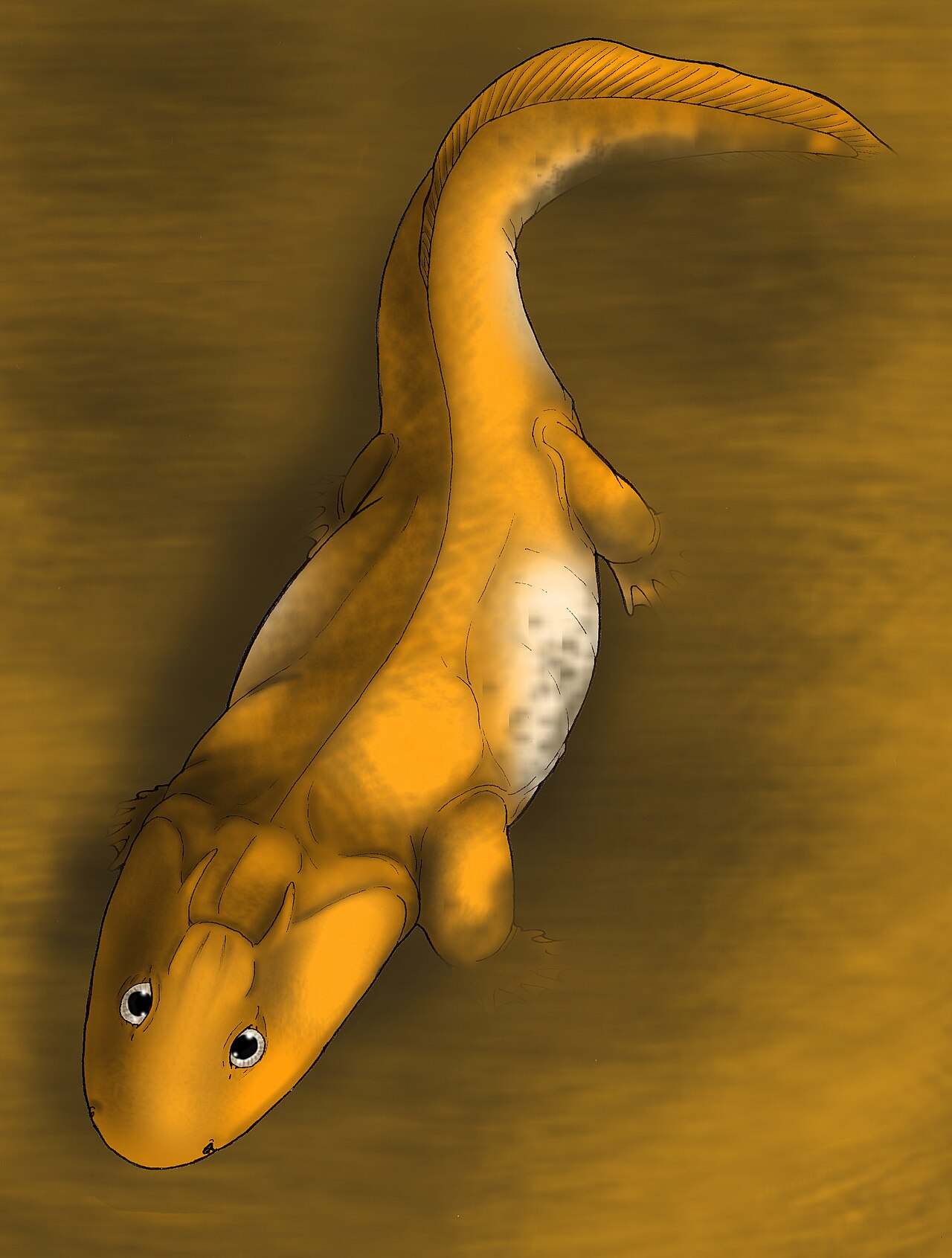
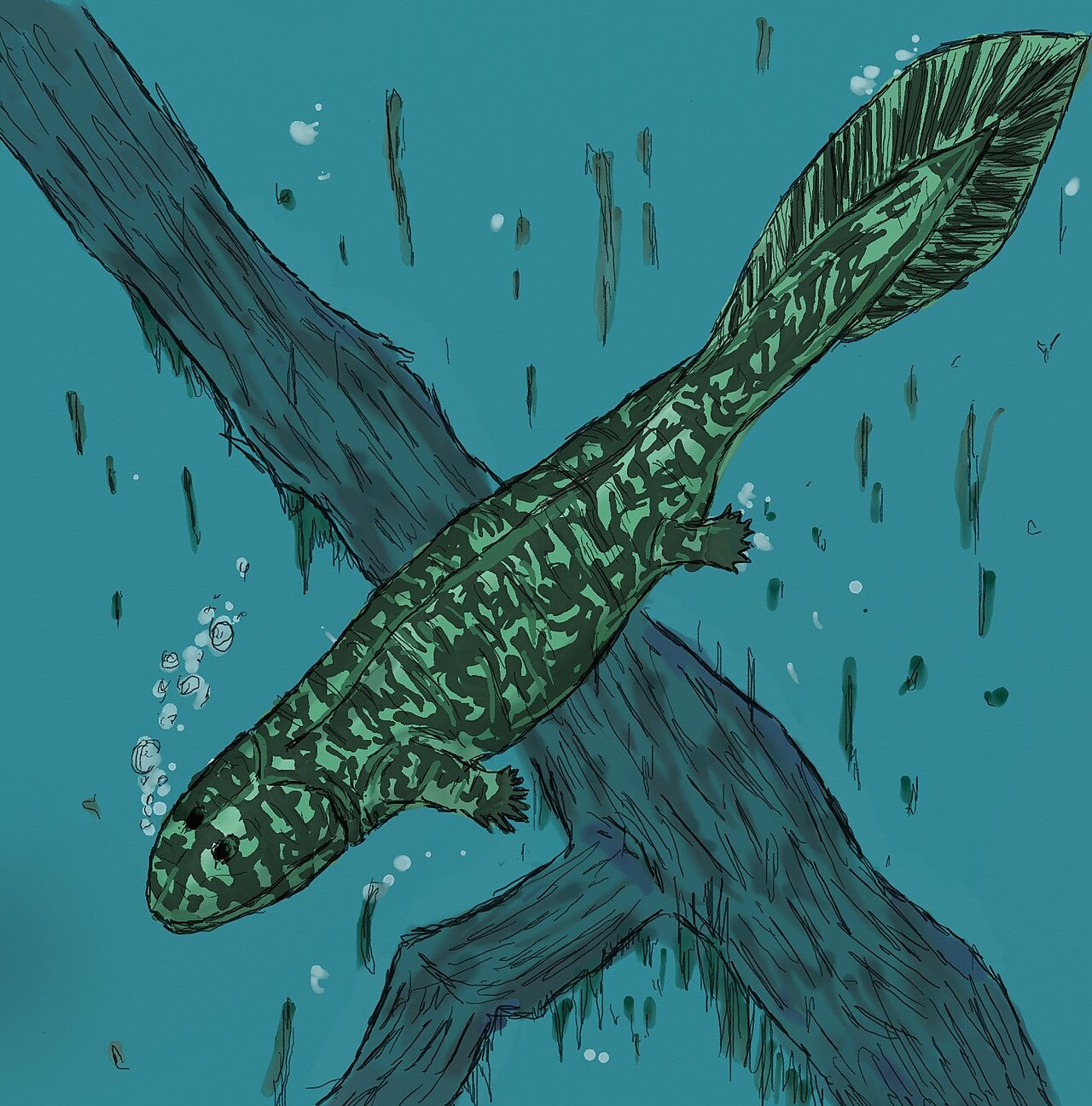
Acanthostega, from Ancient Greek ἄκανθα (ákantha), meaning 'spine', and στέγη (stégē), meaning 'roof', is an extinct genus of stem-tetrapod and one of the earliest known tetrapodomorphs to have recognizable limbs, though earlier forms like Tiktaalik also had limb-like structures.
- field
- Paleontology
- known_for
- Early stem-tetrapod with eight digits on each hand, intermediate between fish and land vertebrates
- location_found
- East Greenland
Lore & Background
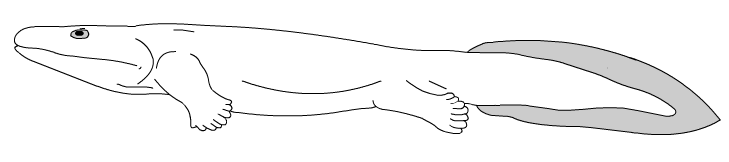
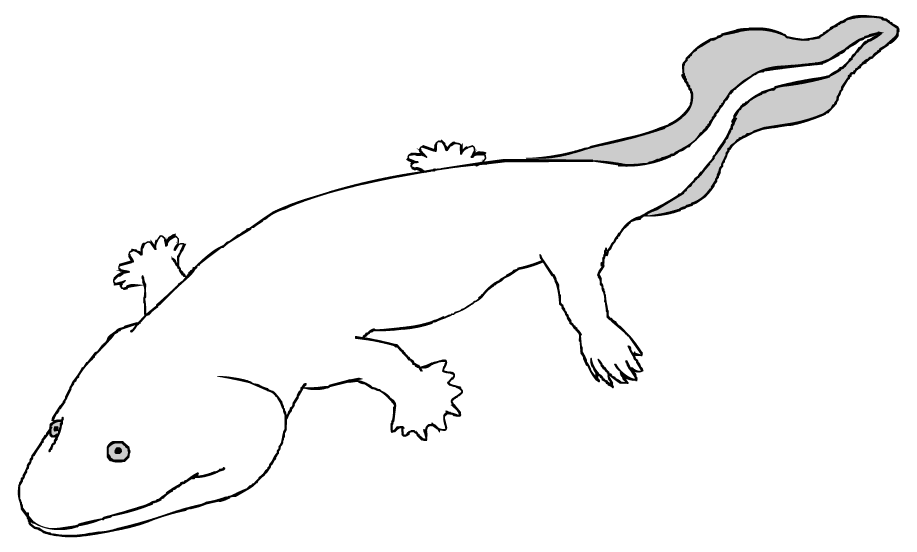
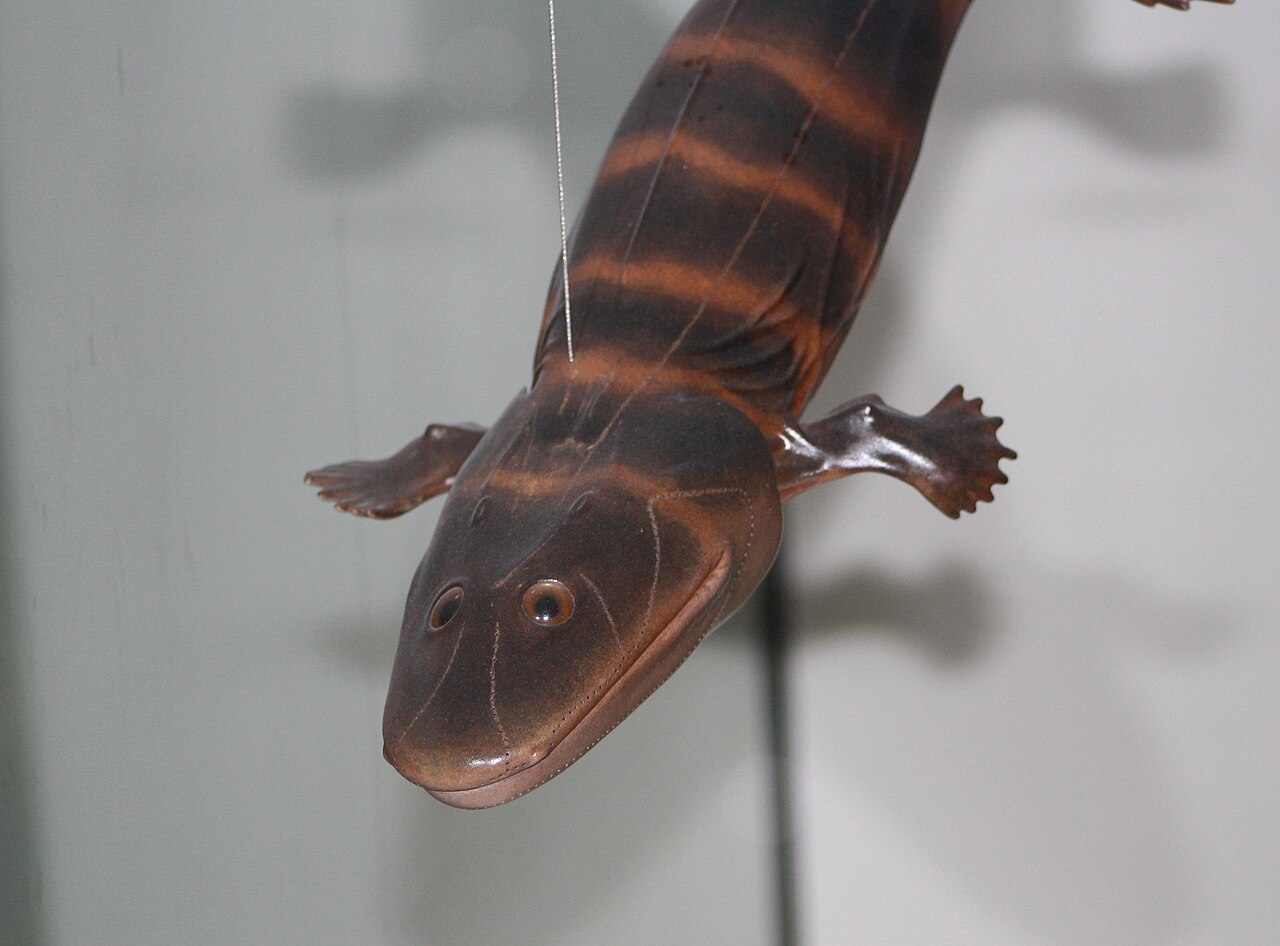
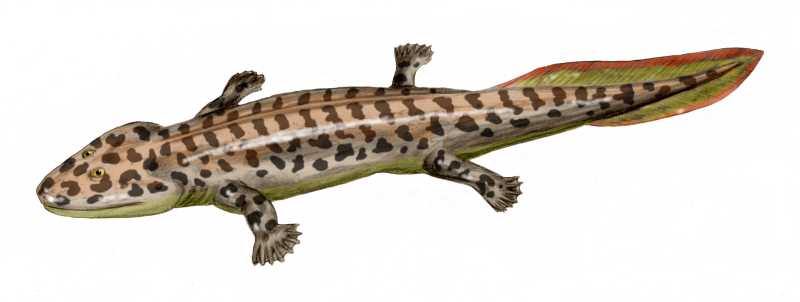
The 60 cm (24 in) Acanthostega had eight digits on each hand (the number of digits on the feet is unclear) linked by webbing. It lacked wrists, and was generally poorly adapted for walking on land. It also had a remarkably fish-like shoulder and forelimb. The front limbs of Acanthostega could not bend forward at the elbow, and therefore could not be brought into a weight bearing position, appearing to be more suitable for paddling or for holding on to aquatic plants.
Reader's Guide
Acanthostega is the earliest stem-tetrapod to show the shift in locomotory dominance from the pectoral girdle to the pelvic girdle. Many morphological changes allowed the pelvic girdle to become a weight-bearing structure, including contact between the two sides of the girdle and fusion with the sacral rib of the vertebral column. These fusions would have made the pelvic region more powerful and equipped to counter gravity when not supported by water. It had internal gills like those of fish, and also lungs, but its ribs were too short to support its chest cavity out of water. Acanthostega is seen as part of widespread evolutionary radiation in the late Devonian, starting with purely aquatic finned tetrapodomorphs, with successors showing increased air-breathing capability and related adaptations. It probably lived in shallow, weed-choked swamps, its legs apparently adapted for these specific ecosystems. Jennifer A. Clack interprets this as showing that Acanthostega was primarily an aquatic animal descended from fish which never left the sea, and the specializations of the tetrapod lineage were exaptations that would later be useful for terrestrial life.
Did You Know?
- Acanthostega had eight digits on each hand, linked by webbing, and lacked wrists.
- Its front limbs could not bend forward at the elbow, making them unsuitable for weight-bearing walking.
- The shift in locomotory dominance from the pectoral to the pelvic girdle is more commonly associated with later tetrapods like Ichthyostega; Acanthostega's pelvic girdle was still relatively small and not fully adapted f
- A histological study indicates Acanthostega matured slowly, with some individuals reaching sexual maturity at more than six years of age.
Gallery
Frequently Asked Questions
What is Acanthostega?
Acanthostega is an extinct stem-tetrapod from the Late Devonian period, recognized as one of the earliest vertebrates to develop true limbs with separate digits. It sits at a pivotal point between lobe-finned fish and the first fully terrestrial vertebrates.
What makes Acanthostega's limbs remarkable?
Each of its four limbs carried eight distinct digits rather than the five seen in most modern tetrapods. This unusual finger count, combined with a wrist-like joint, made it a crucial transitional form linking aquatic fish anatomy to later land-dwelling vertebrate hands.
Where were Acanthostega fossils discovered?
The remains were recovered from sedimentary rock layers in East Greenland, dating to the Late Devonian period. The well-preserved specimens provided the first clear evidence of multi-digited limbs in a stem-tetrapod.
Why is Acanthostega significant in paleontology?
It fills a critical gap in the evolutionary record by documenting the step-by-step shift from purely aquatic to partially terrestrial vertebrate anatomy. Its limb structure shows that the transition to land was not a single leap but a gradual restructuring of fin bones into jointed, digit-bearing appendages.
What does the name Acanthostega mean?
The name comes from two Ancient Greek words: 'ákantha,' meaning spine, and 'stégē,' meaning roof. It was chosen to reference the prominent bony spines along the body and the arched, roof-like structure of the skull.
More in Prehistoric Beasts 1-24
Elsewhere in the Prehistoric Beasts universe
Spotted an error? Know more?
This is a living reference — every entry is fact-audited, and reader corrections feed straight into our audit queue. Suggest an edit · See this site's audit record