
Ceratopsia
Herbivorous, beaked dinosaurs with horns and frills.

Internet Archive Book Images · No restrictions
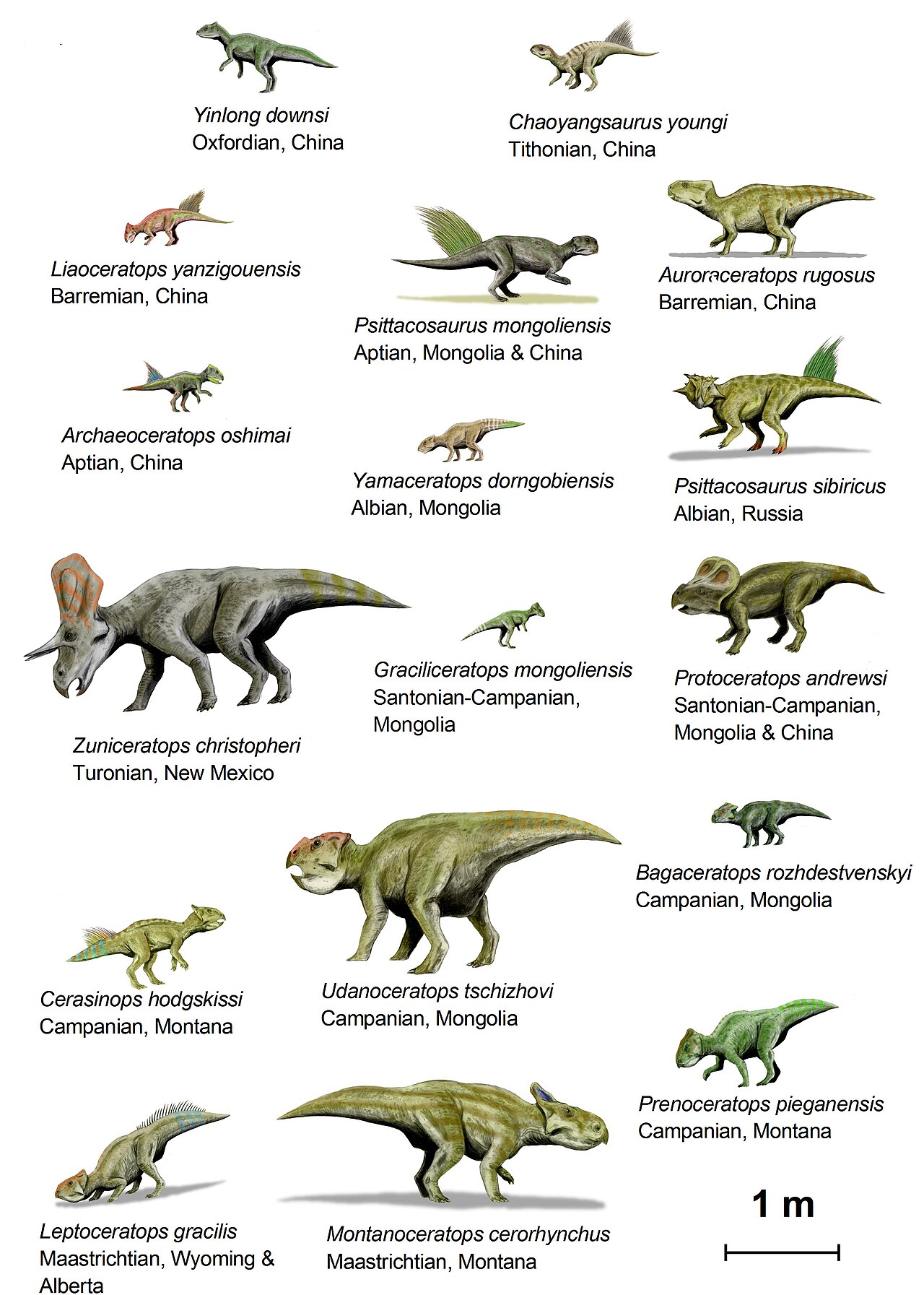
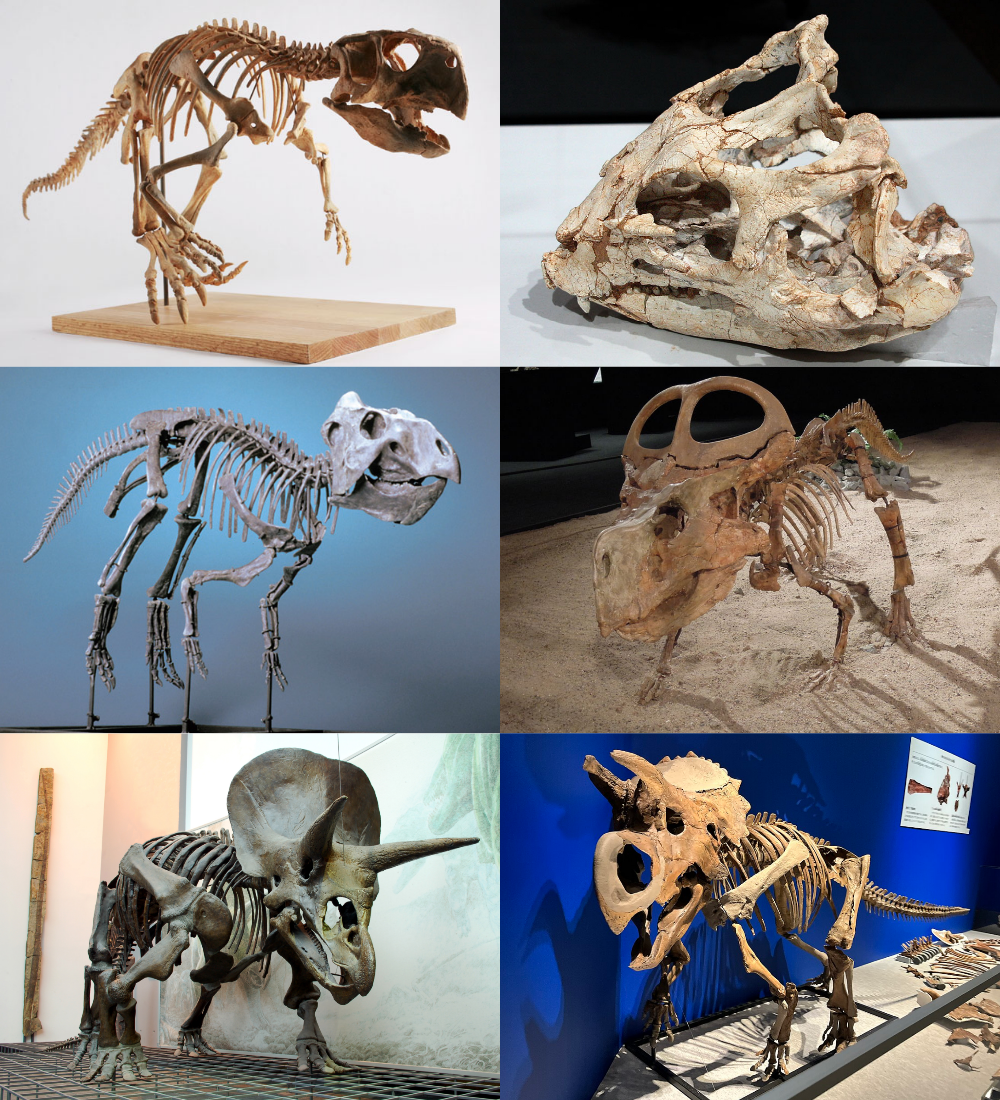
Ceratopsia, also known as Ceratopia, is a group of herbivorous, beaked dinosaurs that thrived in what are now North America, Asia, and Europe during the Cretaceous Period, with ancestral forms living earlier in the Late Jurassic of Asia. They are characterized by a unique rostral bone on the upper jaw that forms a parrot-like beak, and later members developed elaborate facial horns and neck frills. The group includes the well-known Triceratops, and its name is derived from Greek words meaning 'horned faces.'
- latest_species
- Triceratops prorsus (extinct 66 million years ago)
- time_period
- Late Jurassic to Late Cretaceous
- diet
- Herbivorous
- key_anatomical_feature
- Rostral bone (edentulous ossification on upper jaw)
- size_range
- 1 meter (3.3 feet) to over 9 meters (30 feet)
Lore & Background
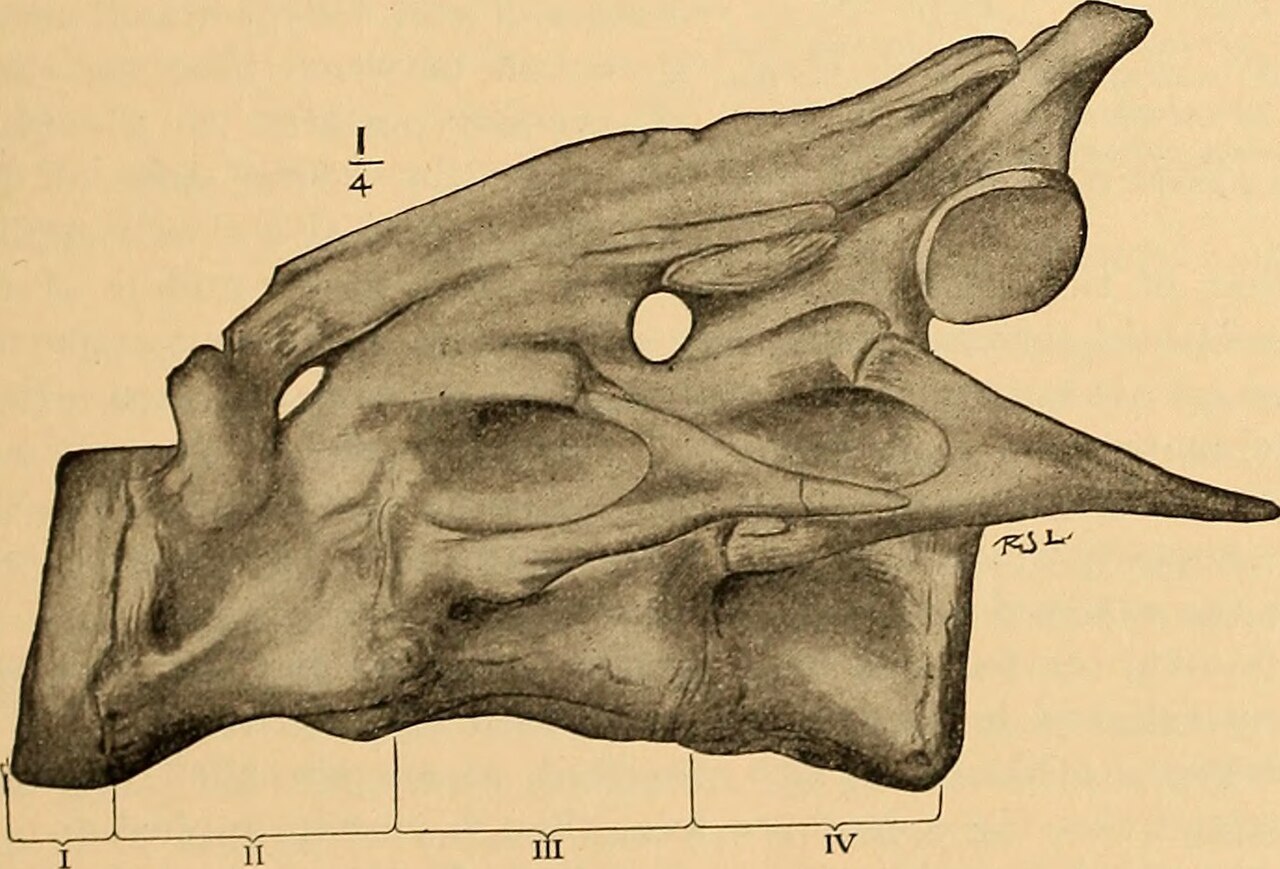
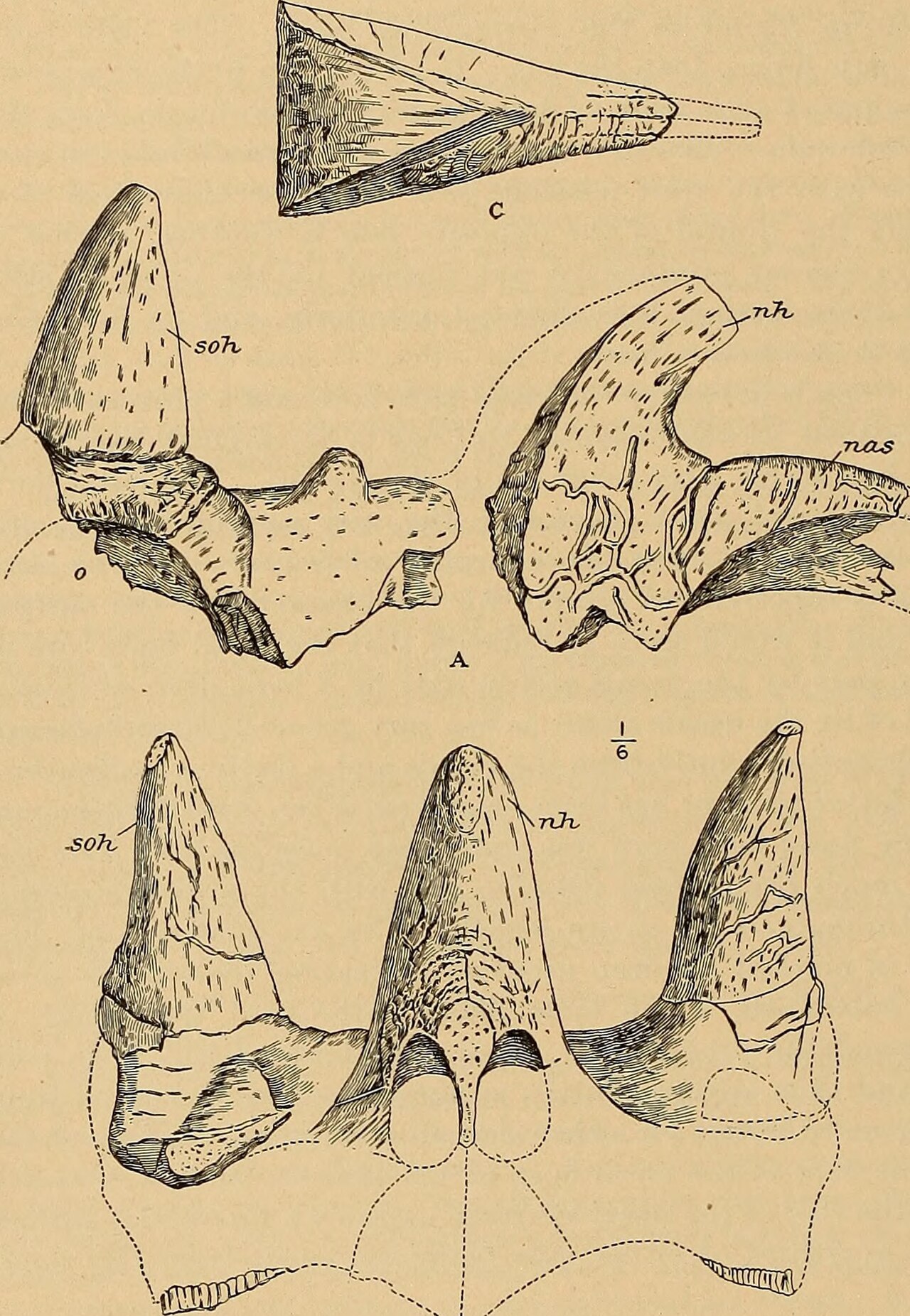
The first ceratopsian remains known to science were fragmentary fossils collected before the U.S. Geological and Geographical Surveys led by F.V. Hayden. The first named ceratopsian was Monoclonius, described by Edward Drinker Cope in 1876. Although earlier dinosaur finds by Joseph Leidy—such as Trachodon and Thespesius—were sometimes thought to be related, they are not ceratopsians. The genus Ceratops was described later by Othniel Charles Marsh in 1888, after Monoclonius. These early specimens provided the first evidence of ceratopsid horns and frills, though Cope initially misinterpreted the frill bone as part of the breastbone.
Reader's Guide
Ceratopsia is significant as a diverse group of ornithischian dinosaurs that evolved from small bipedal forms like Psittacosaurus to large quadrupedal ceratopsids with elaborate horns and frills. The rostral bone, unique to ceratopsians, and the predentary bone formed a beak for chewing plant matter. The neck frills, surrounded by epoccipital bones, may have served for display, thermoregulation, or muscle attachment. In clade-based taxonomy, Ceratopsia is defined as the largest clade containing Ceratops montanus and Triceratops horridus but not Pachycephalosaurus wyomingensis. The earliest known ceratopsian is Yinlong downsi from the Late Jurassic of Asia, and the last species, Triceratops prorsus, went extinct during the Cretaceous–Paleogene extinction event 66 million years ago. The group includes families such as Chaoyangsauridae, Leptoceratopsidae, Protoceratopsidae, and Ceratopsidae.
Did You Know?
- The name Ceratopsia is derived from Greek words meaning 'horned faces.'
- The rostral bone on the upper jaw is a toothless ossification unique to ceratopsians.
- Epoccipital bones, which surround the neck frill, were ornamental and may have helped differentiate species.
Gallery
Frequently Asked Questions
What are Ceratopsia?
Ceratopsia is a clade of plant-eating, beaked dinosaurs that roamed North America, Asia, and Europe during the Cretaceous Period. Their name comes from Greek roots meaning 'horned faces,' a nod to the prominent horns and bony frills that later members grew on their skulls.
What is the defining anatomical feature of Ceratopsia?
Every ceratopsian possesses a specialized rostral bone at the front of the upper jaw, which fuses with the premaxilla to create a parrot-like beak for cropping vegetation. This edentulous (toothless) bony structure is unique to the group and distinguishes them from other herbivorous dinosaurs.
What is the most well-known member of Ceratopsia?
Triceratops prorsus is the flagship species of the entire clade, going extinct at the end of the Cretaceous roughly 66 million years ago. It is one of the largest ceratopsians, exceeding 9 meters in length, and is instantly recognizable for its three facial horns and broad neck frill.
How long did Ceratopsia exist, and how big did they get?
The group first appeared in Late Jurassic Asia and persisted all the way to the very end of the Late Cretaceous, spanning well over 50 million years. Their sizes ranged enormously, from about 1 meter in early, small-bodied forms to more than 9 meters in the largest Late Cretaceous species.
Why do fans and paleontologists care about Ceratopsia?
Ceratopsia provide a textbook example of evolutionary diversification, showing how a simple beaked herbivore gave rise to an extraordinary array of horn and frill shapes across multiple continents. They also serve as key indicators of Late Cretaceous ecosystems and are among the most beloved and culturally iconic dinosaur groups.
More in Prehistoric Beasts 25-34
Elsewhere in the Prehistoric Beasts universe
Spotted an error? Know more?
This is a living reference — every entry is fact-audited, and reader corrections feed straight into our audit queue. Suggest an edit · See this site's audit record