
Woolly rhinoceros
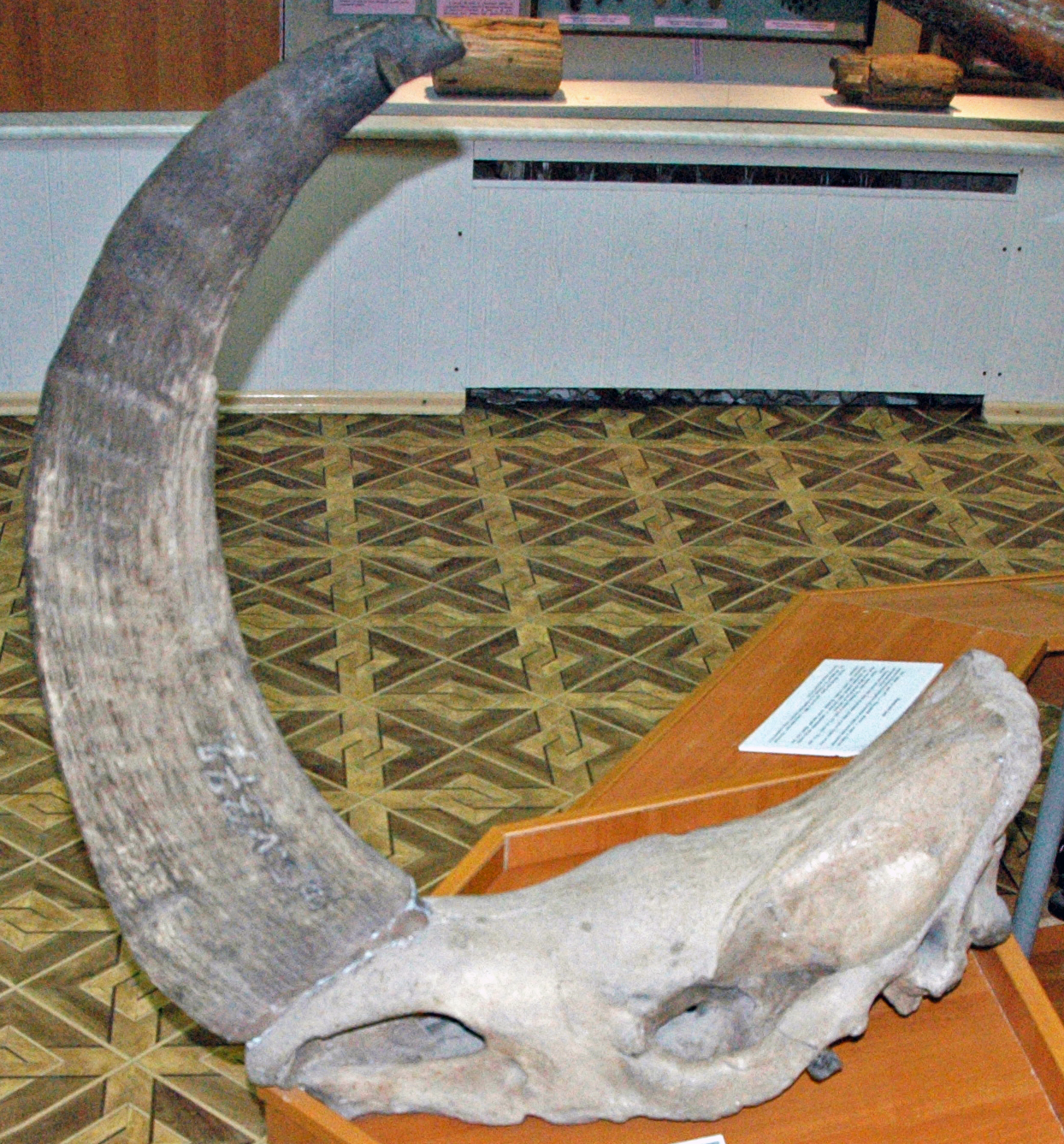
Extinct woolly rhinoceros of the Pleistocene mammoth steppe.

James St. John · CC BY 2.0
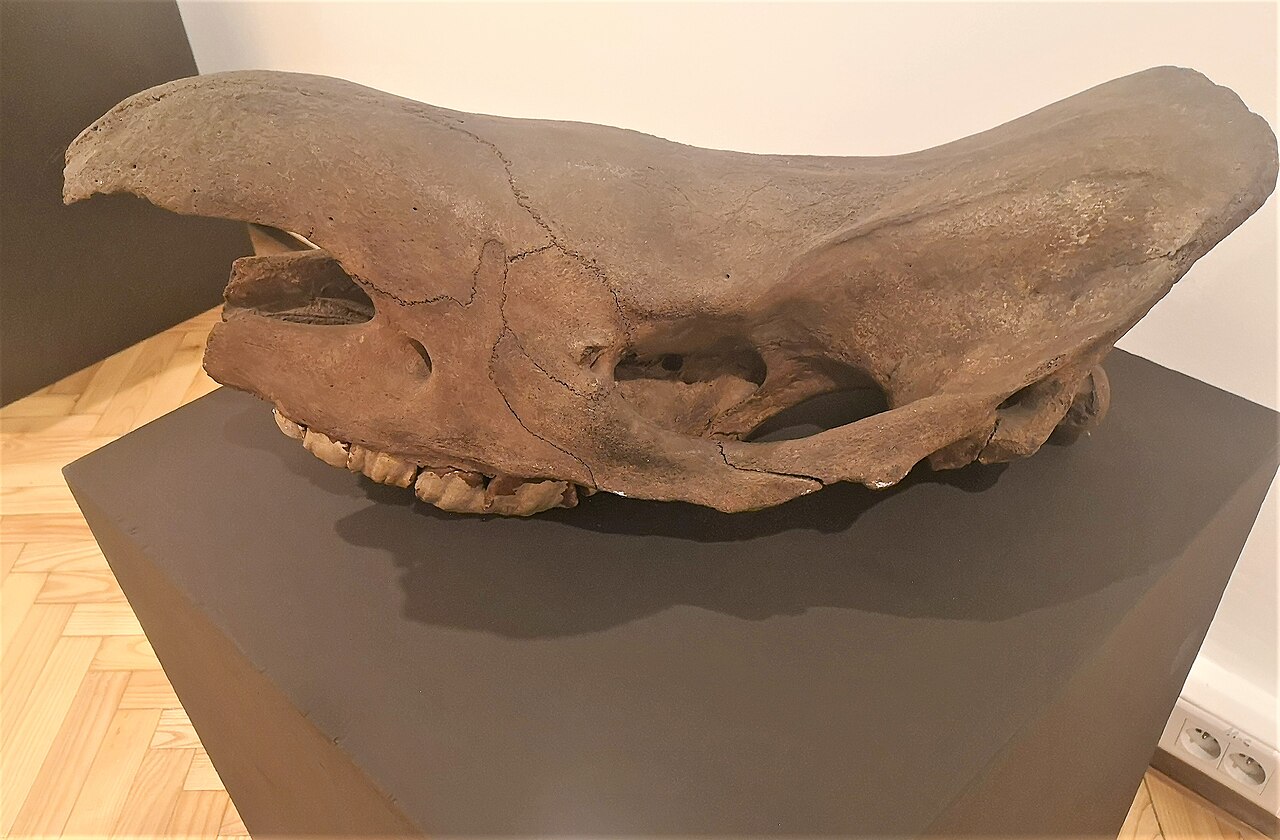
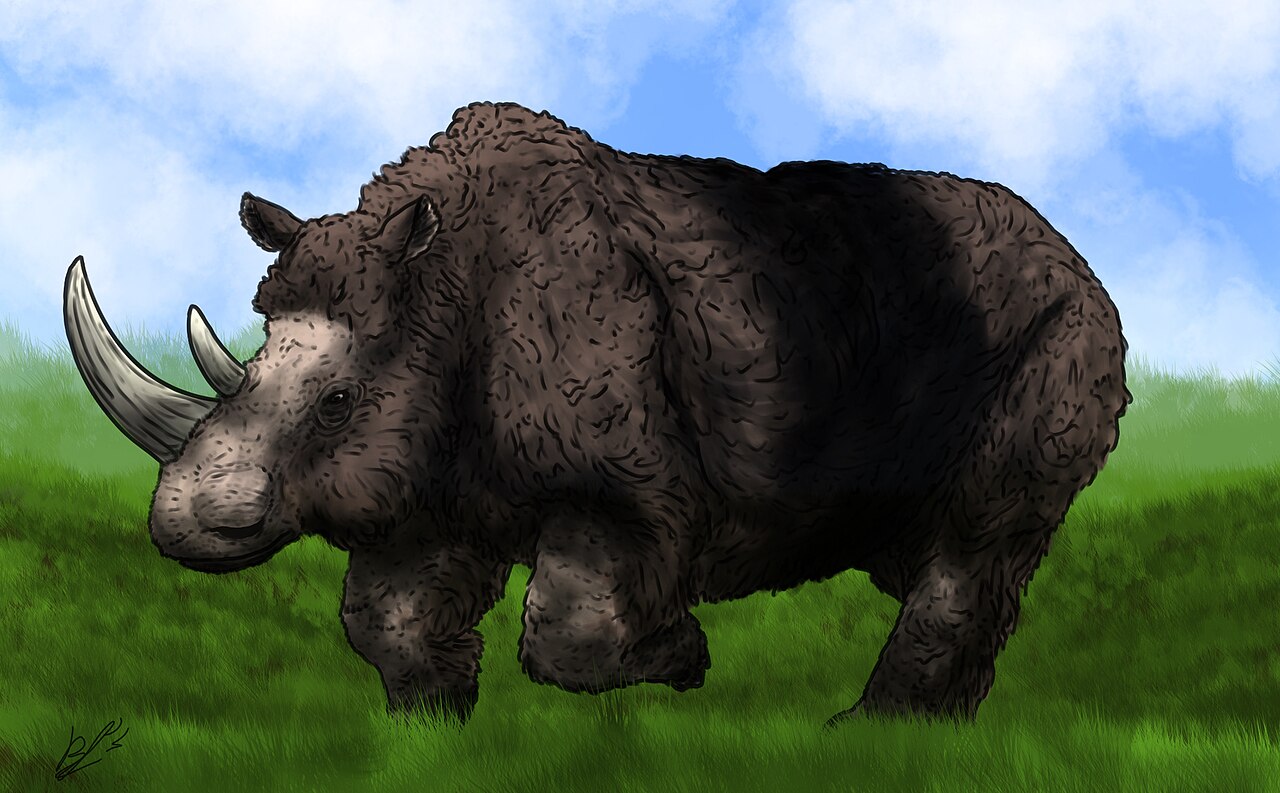
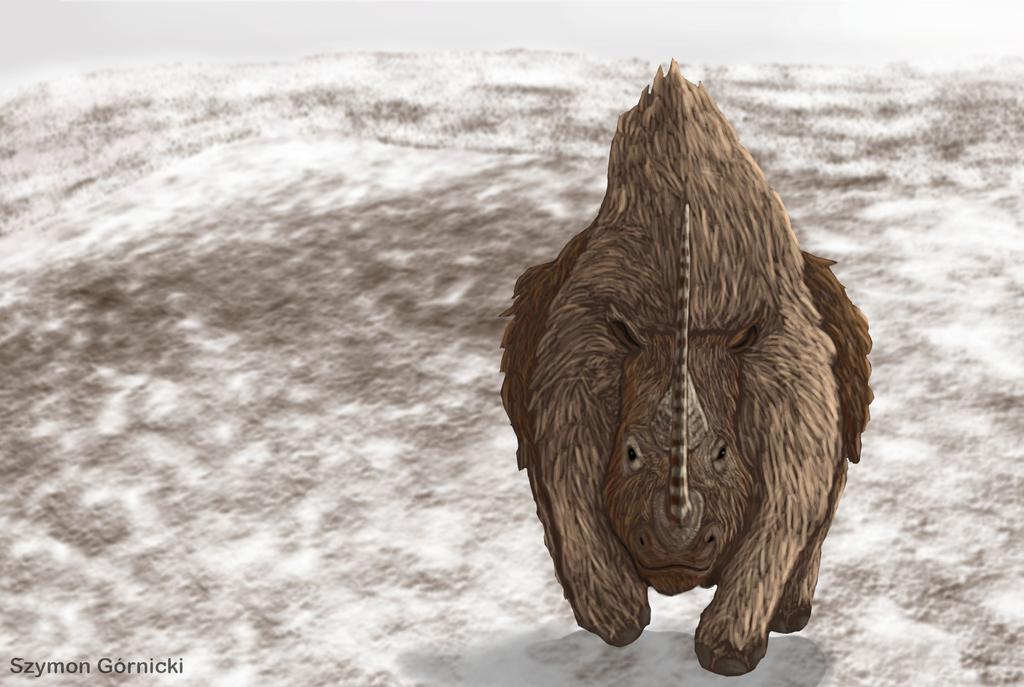
The woolly rhinoceros (Coelodonta antiquitatis) is an extinct species of rhinoceros that inhabited northern Eurasia during the Pleistocene epoch. It was large, comparable in size to the largest living rhinoceros species, the white rhinoceros, and covered with long, thick hair that allowed it to survive in the extremely cold, harsh mammoth steppe. Mummified carcasses preserved in permafrost and many bone remains have been found, and images of woolly rhinoceroses appear among cave paintings in Europe and Asia, with evidence suggesting the species was hunted by humans. Like other Pleistocene megafauna, it became extinct as part of the end-Pleistocene extinction event.
- Scientific name
- Coelodonta antiquitatis
- Time period
- Pleistocene epoch
- Size
- 3.2–3.6 m long, 1.45–1.6 m tall at shoulder, up to 1.5–2 metric tons
- Range
- Northern Eurasia
- Closest living relative
- Sumatran rhinoceros (Dicerorhinus sumatrensis)
- Key features
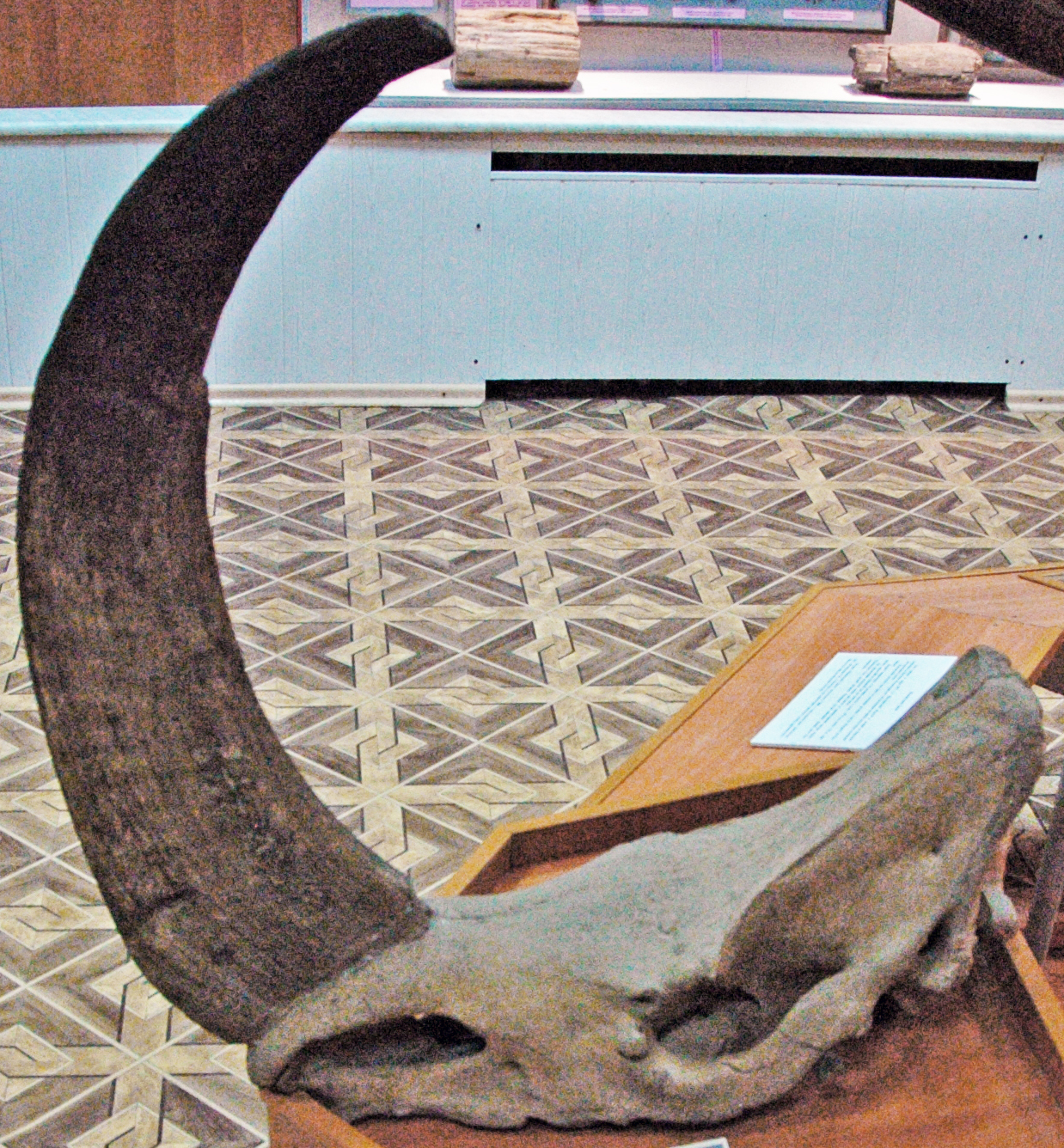
- Long, thick hair; massive hump with fat reserves; two keratin horns; ossified nasal septum
Lore & Background
Woolly rhinoceros remains were known long before the species was scientifically described and were the basis for mythical creatures. Native peoples of Siberia believed their horns were the claws of giant birds. Gotthilf Heinrich von Schubert classified the animal under the name Gryphus antiquitatis, meaning 'griffin of antiquity'.
Reader's Guide
The woolly rhinoceros is significant as a classic example of Pleistocene megafauna adapted to cold environments, with features such as long hair, a fat-storing hump, and an ossified nasal septum for grazing under snow. The species provides key insights into Ice Age ecology, human interaction through cave paintings and hunting evidence, and the processes of extinction during climate change. Its closest living relative, the Sumatran rhinoceros, highlights evolutionary links between extinct and extant species. The woolly rhinoceros also illustrates how ancient remains influenced mythology and early scientific classification, from griffins to dragons, before being properly understood.
Did You Know?
- The woolly rhinoceros had a massive hump containing substantial fat reserves, likely used for thermoregulation and energy storage.
- Its nasal horn was often flattened in cross-section, and abrasion patterns suggest it was used to brush away snow when grazing.
- The species' scientific name Coelodonta antiquitatis means 'hollow-tooth of antiquity', referring to depressions in its molar structure.
Built for the Ice: Anatomy and Cold Adaptation
The woolly mammoth was a massive proboscidean roughly comparable in bulk to a modern African elephant. Adult males stood between 2.67 and 3.49 metres at the shoulder and carried between 3.9 and 8.2 tonnes of body mass, while females were somewhat smaller, ranging from 2.3 to 2.6 metres and 2.8 to 4 tonnes. A newborn calf tipped the scales at roughly 90 kilograms. To survive the harsh glacial climates of the last ice age, the animal wore a dense coat of long outer guard hairs over a shorter insulating undercoat, with colour ranging from dark to light tones. Its ears and tail were notably short, a design that reduced both frostbite risk and unnecessary heat dissipation. The mammoth's long, curved tusks served for foraging, combat, and manipulating objects, much as a modern elephant uses its own. Its dentition consisted of four molars that were replaced six times over a lifespan that could stretch to around sixty years. Its diet centred on forbs and grasses, and it roamed the vast mammoth steppe stretching across northern Eurasia and North America.
From Myth to Science: The Identification of a New Species
For centuries, the massive bones and tusks unearthed in Siberia and elsewhere were woven into local legends and interpreted as the remains of mythical creatures. When these specimens first reached European scholars, explanations still leaned on scripture. A decade later, German zoologist Johann Philipp Breyne made a similar identification, again invoking flood transport from the tropics. The very word "mammoth," first recorded in early seventeenth-century Europe for Siberian tusks, may derive from a Vogul term meaning "earth-horn," an Arabic rendering of the biblical behemoth, or even an Estonian combination of "earth" and "mole."
Hunted, Honoured, and Lost: Coexistence with Humans
The woolly mammoth shared its world with early humans across the mammoth steppe, and the relationship was deeply practical. People hunted the animals for meat and repurposed their bones and tusks into tools, works of art, and even structural elements for dwellings. This intimate contact meant that mammoth remains were familiar to native Siberian and Native American communities long before European science took notice, and those communities developed their own explanations for the strange giant bones. The species' numbers began to dwindle toward the close of the Late Pleistocene. Even after the last individual perished, human use of mammoth ivory did not stop; the tradition of working that ancient material continues to this day. In North America, the woolly mammoth also interbred with its cousin the Columbian mammoth, a fact now confirmed through DNA analysis, adding another layer to the complex story of these ice-age giants.
Frozen in Time: Legacy and the Dream of Revival
No prehistoric animal is better documented than the woolly mammoth. Frozen carcasses recovered from Siberian and North American permafrost, together with complete skeletons, preserved teeth, stomach contents, dung, and life-sized depictions in prehistoric cave paintings, have given researchers an unusually rich picture of its biology and daily existence. As of now, however, none of the proposed approaches is technically feasible.
Gallery

Frequently Asked Questions
What is the Woolly rhinoceros?
The Woolly rhinoceros (Coelodonta antiquitatis) was a massive, heavily furred rhinoceros that roamed the frozen grasslands of northern Eurasia during the Pleistocene epoch. It stood roughly 1.5 meters at the shoulder and could weigh up to two metric tons, making it comparable in bulk to a modern white rhinoceros.
What are the Woolly rhinoceros's key physical features?
It was built for deep winter survival, sporting a thick coat of long hair, a large fat-storing hump along its back, and two keratin horns projecting from its snout. Its nasal septum was fully ossified, giving the skull extra structural rigidity.
Where and when did the Woolly rhinoceros live?
It inhabited the mammoth-steppe biome across northern Eurasia throughout the Pleistocene, enduring extremely cold and harsh seasonal conditions. Its nearest living relative is the Sumatran rhinoceros (Dicerorhinus sumatrensis).
How did the Woolly rhinoceros go extinct?
Like other Pleistocene megafauna, it eventually vanished as post-glacial climates shifted and human populations spread across its range. Archaeological evidence and cave-art depictions indicate that early humans actively hunted the species, likely accelerating its decline.
Why is the Woolly rhinoceros important?
Mummified carcasses locked in permafrost and a wealth of skeletal remains make it one of the best-preserved extinct megafauna known to science. Its frequent appearance in prehistoric cave paintings across Europe and Asia also shows it occupied a prominent role in the ecology and culture of early human communities.
More in Prehistoric Beasts 1-24
Elsewhere in the Prehistoric Beasts universe
Spotted an error? Know more?
This is a living reference — every entry is fact-audited, and reader corrections feed straight into our audit queue. Suggest an edit · See this site's audit record